



"The best-case scenario is that the State captures us." Ángel Flores says it without trembling, like someone listing possible outcomes and choosing the least severe one. And he does not say it out of heroism, this is a conversation about mere probabilities. A conversation that has become increasingly common in El Salvador since May 2025, the month in which President Nayib Bukele’s government triggered a mass exodus of journalists and human rights defenders. Those who stayed know, or believe they can calculate, the cost of their resistance.
Ángel has become one of the most visible faces in the defense of land in the eastern part of the country. He is the regional coordinator of the Indigenous Movement for the Articulation of the Struggles of the Ancestral Peoples of El Salvador (MILPA), one of the most outspoken organizations in the fight against the dispossession of territory through the construction of State megaprojects.
Since 2021, when Bukele’s government announced the construction of the Pacific Airport in La Unión, in the eastern part of the country, Ángel became an uncomfortable presence. The megaproject promised development, but the communities asked about their homes, their crops, the water, the compensation from the State. Ángel began organizing meetings, building bridges between scattered rural communities, explaining rights that exist only on paper but in practice are negotiated: housing, fair compensation, prior consultation, the environment. Basic rights.
After providing support through every phase of the eviction of hundreds of families in the communities of El Condadillo and Flor de Mangle, located in strategic areas for the State project, Ángel Flores’s name began to surface in other spaces.
First came the attacks on social media. Then he detected surveillance: vehicles that appeared far too often, unfamiliar faces at community meetings, police photographing farmers, Prosecutor’s Office agents asking about local leaders, and even restrictions in judicial proceedings over land tenure.
But the repression escalated from day one of the state of exception, the most publicized measure of the Bukele model of security. On March 27, 2022, the day the Bukele-aligned Legislative Assembly granted exceptional powers to the State, the National Civil Police arrested two MILPA defenders: José Abel Claro Martínez, a member of the Community Development Association (ADESCO) of Nuevo Amanecer, and Walter Francisco Paz, a community activist.
On June 9, 2023, the Police arrested one of MILPA’s founders, Óscar René Martínez Iglesias, a fisherman whom they accused, without evidence, of belonging to gangs. All three defenders opposed the construction of the Airport.
Neither the Police nor the Office of the Attorney General explained the crimes they were accused of or the reasons behind the defenders’ arrest.
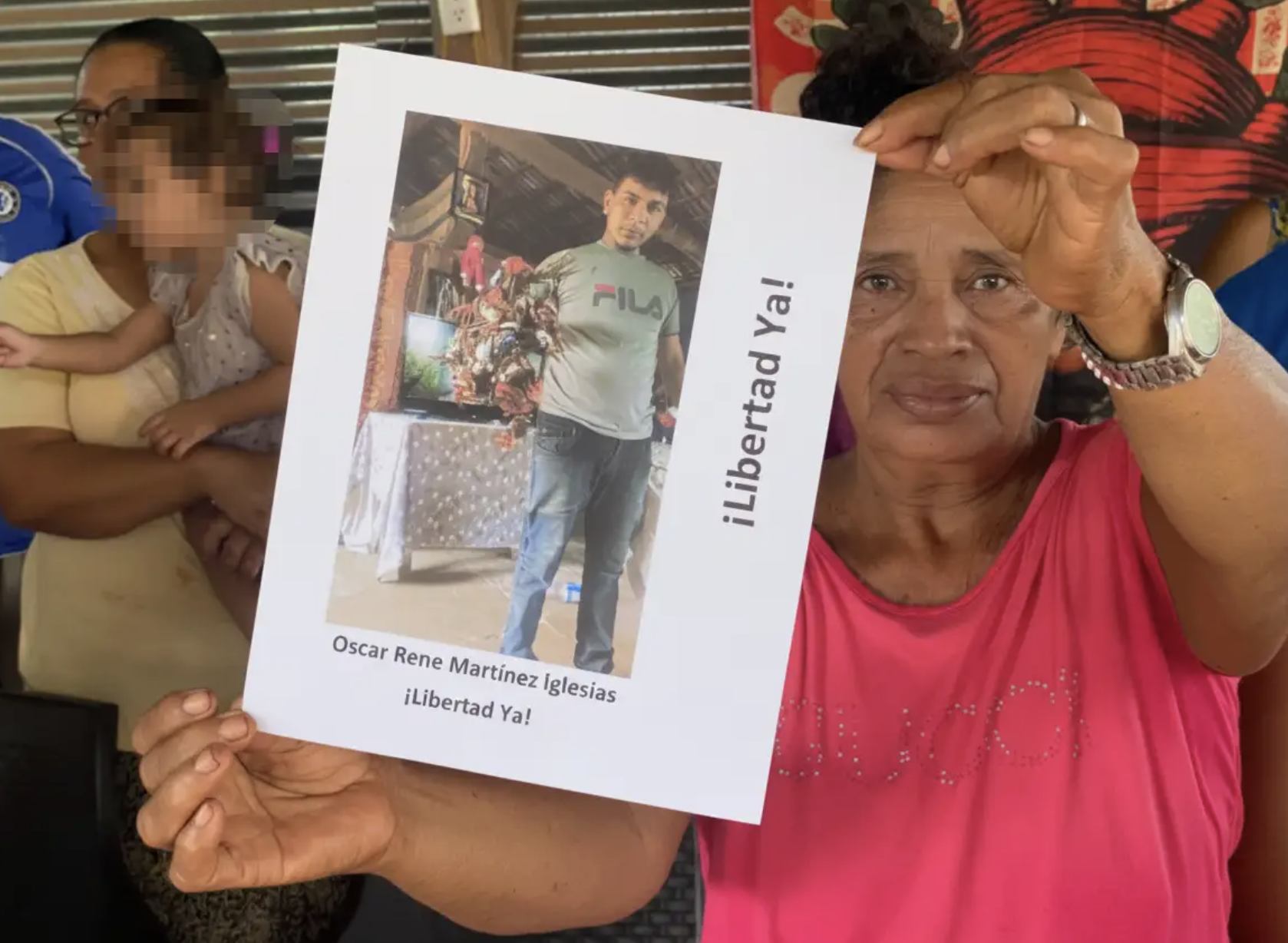
Óscar René Martínez Iglesias, father of two young children, is a member of the Nuevo Amanecer community, in Lenca territory in La Unión, emblematic for its struggle for land and access to dignified housing. / UNT.
The state of exception, extended dozens of times over four consecutive years, suspends three constitutional guarantees and allows detentions without a judicial warrant. International organizations such as the Inter-American Commission on Human Rights (IACHR) have warned that the regime is no longer an exceptional measure, and independent experts argue that it has enabled widespread human rights violations: arbitrary arrests, killings, torture, sexual violence, and enforced disappearances, which could constitute crimes against humanity.
State repression does not occur in a vacuum. For Ángel, it is intertwined with other actors competing for control of the territory: business groups and organized crime structures that take advantage of institutional inaction to expand over lands belonging to Indigenous and rural communities.
One month after the arrest of a MILPA founder in the community of El Icacal, on July 12, 2023, the company Desarrollos Turísticos del Pacífico, S.A. de C.V. began fencing off large areas of the beach, declaring them private property. Among the affected areas are mangroves officially registered as a Protected Natural Area, as well as coastal lands historically inhabited by local families. The objective: to develop a tourism project in the area.
Parallel to this process, the persecution of community resistance intensified. To date, six fishermen linked to the defense of that community have been arrested, and five of them remain in prison.
But violence also escalated through other means. In November 2023, hooded men traveling in a gray pickup truck broke into the home of a family in the community. They pointed firearms at them and threatened them: if they do not leave, they will be killed.
Because this is what life is like in these territories, Ángel insists that the best-case scenario is that he is captured. Because he is aware there are worse ones: the violence of organized crime and private business actors who have already demonstrated their power and resources; and a State that does not protect, but instead silences, persecutes, and criminalizes.
Nayib Bukele has categorically denied the existence of repression or persecution of critical voices in his government. In September 2024, before the United Nations, he stated: "In El Salvador we do not imprison our opposition, we do not censor opinions, we do not confiscate property from those who think differently, we do not arrest people for expressing their ideas."
His discourse contrasts with reality: since 2019, the Salvadoran government has promoted attacks and the stigmatization of critical voices, has legally suffocated civil society organizations that oversee its actions, has arrested more than thirty human rights defenders, and has forced hundreds of Salvadorans into exile for political reasons.
How the siege was tightened: delegitimize, suffocate, and persecute
El Salvador’s security model has become a reference point for the region. The country went from being labeled as the "murder capital of the world" in 2015, with a record rate of 105 homicides per 100,000 inhabitants, to reaching a historic low of 1.3 homicides per 100,000 inhabitants in 2025.
Citing these figures, political leaders across Latin America propose El Salvador’s strategy as the only path to combat organized crime. The formula, however, includes mass arrests, granting exceptional powers to the State, and dismantling checks and balances to concentrate power.
Politicians such as Javier Milei in Argentina and Daniel Noboa in Ecuador have praised Bukele’s "iron fist" approach. Even Donald Trump has called him "his favorite person," "a great ally," and has praised his maximum-security prisons.
In 2025, following an agreement with Bukele, the Trump administration sent dozens of Salvadoran and Venezuelan migrants to the Terrorism Confinement Center (CECOT) in El Salvador, most of them without due process or a judicial sentence. The horrors of El Salvador’s prisons flooded international media coverage when, eventually, the migrants were released and sent to Venezuela.
A report by Human Rights Watch (HRW) and Cristosal gathered hundreds of testimonies of torture, sexual abuse, and enforced disappearances committed against migrants during their stay in the Central American country. By that point, there were already more than 3,000 complaints of human rights violations in over 20 Salvadoran prisons that rarely make international headlines.
But abuses by Bukele’s government did not begin with the state of exception. A timeline built by FOCOS based on testimonies from victims, civil society organizations, and independent experts documented how civic space was closed in El Salvador, from initial rhetorical confrontation and delegitimization to the establishment of institutionalized state repression.
In 2020, the first departures took place. Former officials from different political parties, officials from key institutions now under ruling party control, and around a dozen journalists who, according to the Association of Journalists of El Salvador (APES), chose to keep their exile silent.
With the arrival of Bukele’s party Nuevas Ideas in 2021, the Legislative Assembly delivered the final blow to the last institutions capable of restraining him: its first decision was to remove the magistrates of the Constitutional Chamber and the Attorney General, Raúl Melara, who was investigating alleged acts of corruption committed by his officials during the pandemic.
The legal machinery also began to tighten. Bukele’s legislators approved judicial reforms to remove or reassign inconvenient judges, force resignations, and appoint aligned lawyers to strategic courts, consolidating a subdued justice system without the capacity for checks and balances and paving the way toward the state of exception.
This measure came in response to a massacre of 87 people triggered by the breakdown of the government’s pact with gangs, as extensively documented by El Faro. For four years, Salvadorans have lived under a suspension of constitutional guarantees that allows detentions without a judicial order, opaque judicial processes, and wiretapping without judicial oversight.
According to official data, more than 91,000 Salvadorans have been detained under the state of exception, over 1.4% of the population. Human rights organizations have documented the death of 500 people in state custody, more than 400 enforced disappearances, and more than 800 cases of torture and ill-treatment, including beatings, electric shocks, sexual violence, forced nudity, and psychological abuse.
With the regime, the practice of persecuting and imprisoning political opponents and critical voices also returned, a practice that had receded after the signing of the Peace Accords in 1992. A report by Cristosal, one of the most influential human rights organizations in Central America and itself targeted in El Salvador, documented 245 victims of patterns of persecution, harassment, and criminalization between 2019 and 2025. Of these, 86 individuals remain detained without access to trial, and only seven have been convicted in proceedings lacking minimum guarantees.
The point of no return: May 2025
May 2025 felt like a breaking point. The threats of detention against journalists from El Faro, the imprisonment of prominent human rights defenders, along with rumors that could no longer be dismissed, created an atmosphere of saturation that culminated in a mass exile of human rights defenders, lawyers, and journalists.
In hearings before the Inter-American Commission on Human Rights (IACHR), organizations reported that at least 130 defenders and journalists had been forced into exile.
More than 80 people left after the night of May 18, following the arrest of Ruth López, head of Cristosal’s Anti-Corruption Unit and a recognized human rights defender, named one of the BBC’s 100 most influential women in the world in 2024. When the State decided to go after her, the message was clear: no one is exempt from the regime’s repression.
On June 7, it was followed by the arrest of constitutional lawyer Enrique Anaya, a fierce critic of the government who just two days earlier had expressed on national television his fear of being arrested for his opinions: "all of us who dare to criticize do so with fear."
At that point, it became clear these were not isolated cases: Bukele had begun the largest wave of repression since the end of the civil war.
One day after Anaya’s arrest, on June 8, police officers were asking agricultural workers about an "agitator causing unrest in the communities" of La Unión. Ángel Flores believes they were looking for him. Weeks later, he confirmed it.
On July 23, police patrols stormed the locality of La Lima, in La Unión, as part of a judicial eviction process initiated in the Intipucá Court. They separated women and men and forced them to show their identification documents. Ángel was among them, accompanying a gathering of families who were demanding explanations from Prosecutor’s Office agents over an inspection carried out without a judicial order in seven of their homes.
After taking photographs of the crowd, the agents focused on Ángel. They photographed his ID from both sides and recorded his details in a notebook.
The communities of La Lima and El Icacal reported the incident to the Prosecutor’s Office, accusing police officers from the Intipucá delegation of violently entering the community. They also filed a complaint against the district justice of the peace for possible arbitrary acts against the rural families.
But the authorities’ response was to investigate the victims. Prosecutor’s Office agents arrived in Intipucá a week later, asking about Ángel and eight of his MILPA colleagues. They went to the district’s family registry office to request personal information such as birth certificates, death certificates of relatives, marriage records, and information about assets and property.
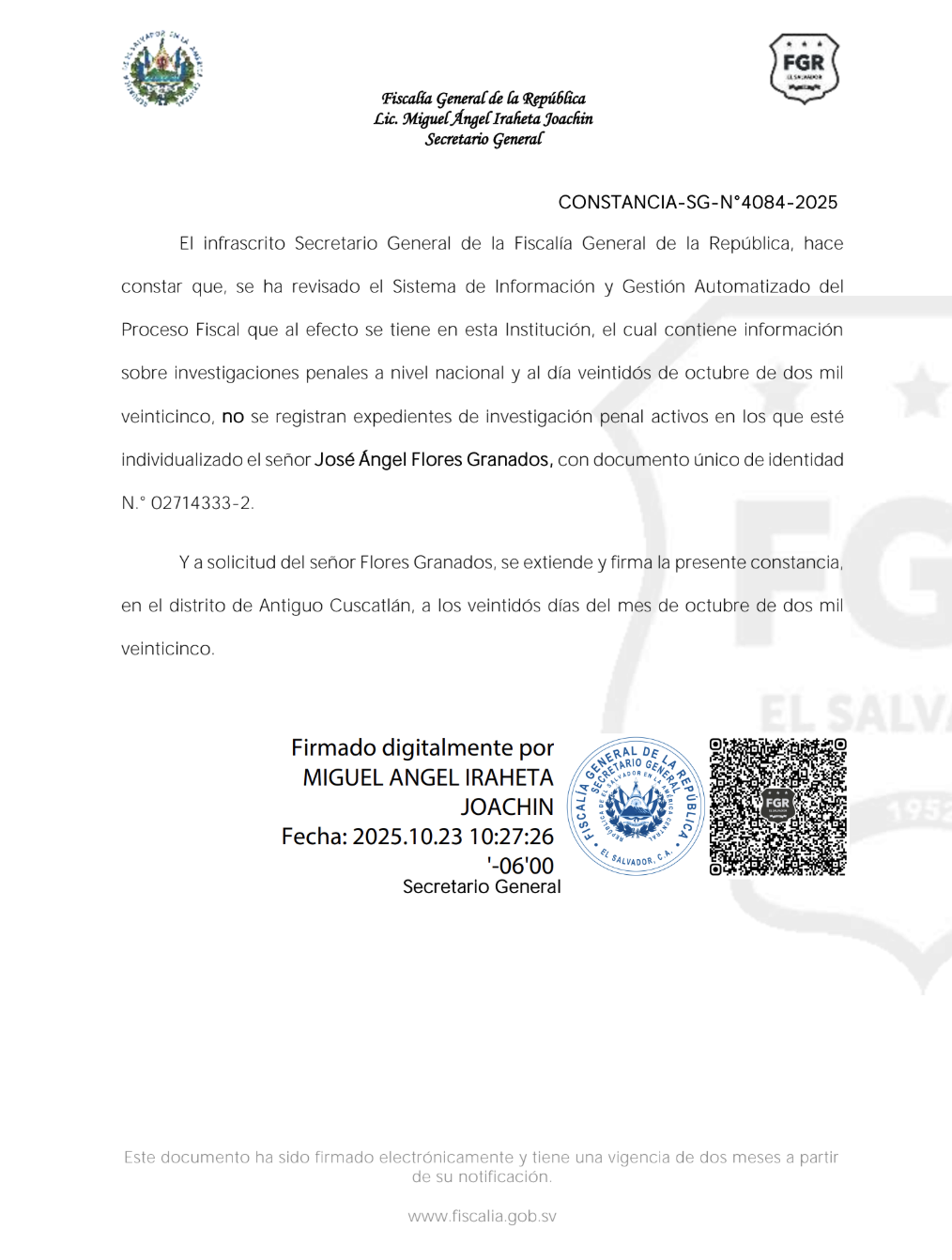
Although the nine individuals under scrutiny requested clarification from the Prosecutor’s Office about whether there were any active criminal proceedings against them, they were notified, in a certificate issued on October 22, that no such proceedings existed. For this reason, Ángel maintains that "the Prosecutor’s Office has requested information about us without any legal basis to support it."
FOCOS requested a response from the National Civil Police and the Office of the Attorney General regarding reports of surveillance, monitoring, arrests of community defenders, and possible irregularities in investigations involving MILPA leaders. At the time of publication, neither institution had responded to the inquiries.
Ángel Flores is clear that the state of exception is the main tool of state repression against defenders in the territory. The Roundtable for the Right to Defend Rights identifies grassroots and territorial defenders as the most targeted in El Salvador. In 2024, cases of aggression against defenders in these territories increased by as much as 56%.
Even so, he has chosen to remain in the territory he defends. He walks the same paths where the Pacific Airport runway is planned to be built. He knows that every community meeting may be, and will be, monitored, and that every statement adds another entry to a file, a blacklist he has never seen.
— Ángel Flores, regional coordinator of MILPA
Ángel remains in the cracks of civic space, feeling that his struggle is intrinsically tied to the land he protects. "We are not defenders of nature, we are nature defending itself," he concludes.
The return of mining and the cost of resistance
Vidalina Morales remembers clearly that opposing mining in El Salvador means risking your life. It was in 2004, in Cabañas, in the northern region of the country, when she realized it. The Canadian company Pacific Rim sought to exploit underground gold deposits, and encountered fierce resistance from local communities. Then came the pressure, the threats, and the violence that culminated in the murders of environmentalists from the Environmental Committee of Cabañas (CAS), which remain unpunished.
In 2009, they first killed environmental activist and community leader Marcelo Rivera, then Ramiro Rivera, and later Dora Sorto, who was eight months pregnant. This last crime marked Vidalina forever.
"Those moments have deeply shaped my courage, my strength," Vidalina says one morning in 2025, 17 years after the murders that remain unresolved. "This struggle is stained with the blood of compañeros who believed that mining would bring negative impacts on health, the environment, the water, and the land."
But not even the violence managed to stop the anti-mining movement. For years, ADES, together with community organizations, churches, and universities, led a citizen resistance that achieved something unprecedented: in 2017, El Salvador became the first country in the world to ban metallic mining due to its impact on its limited territory of 21,000 square kilometers and on the Lempa River, which runs across the country from north to south.
That is why, when Nayib Bukele sought for his Legislative Assembly to reverse the law and bring mining back, he knew he would face organized territories.
Vidalina Morales has been the strongest voice in the anti-mining struggle. She was among the first to warn about the government’s interest in reviving mining. And when the Prosecutor’s Office arrested five environmental leaders from the Santa Marta community, she did not hesitate to denounce it.
In the early hours of January 11, 2023, the Prosecutor’s Office, controlled by the ruling party, arrested Teodoro Antonio Pacheco, director of ADES, legal advisor Saúl Agustín Rivas, and three other community leaders in Santa Marta: Miguel Ángel Gámez, Alejandro Lainez, and Pedro Antonio Rivas. They were accused of murdering a woman in 1989, when they were guerrilla fighters against the Salvadoran Army. The case, however, relied on the testimony of a witness who denied having seen the crime, and a body that was never found.
Vidalina took on the role of spokesperson for ADES. She led protests and press conferences where she stated that the Santa Marta leaders were criminalized for defending the environment.
On May 16, the United Nations Special Rapporteur on human rights defenders condemned the arrests as an "attempt to intimidate" environmental activists and demanded their release. The following day, Bukele’s government responded by arresting Vidalina Morales’s son under the state of exception.
"I have seen the death of Marcelo, I have seen the death of Ramiro, of compañera Dora," she recalls. "But when they arrested my son, those were the hardest hours I have ever lived. What they wanted was for me to stop speaking, to step away from the struggle."
Twenty-four hours after his arrest, her son was released without any explanation, following pressure from international organizations. But the harassment did not stop: Vidalina reported surveillance, people loitering around her home at night, unidentified individuals asking about her in the communities and at the organization’s offices, and being followed in the streets.
None of this silenced her. In October 2024, a court acquitted the five environmental leaders from Santa Marta, and the community celebrated the decision, once again, with a speech by Vidalina.
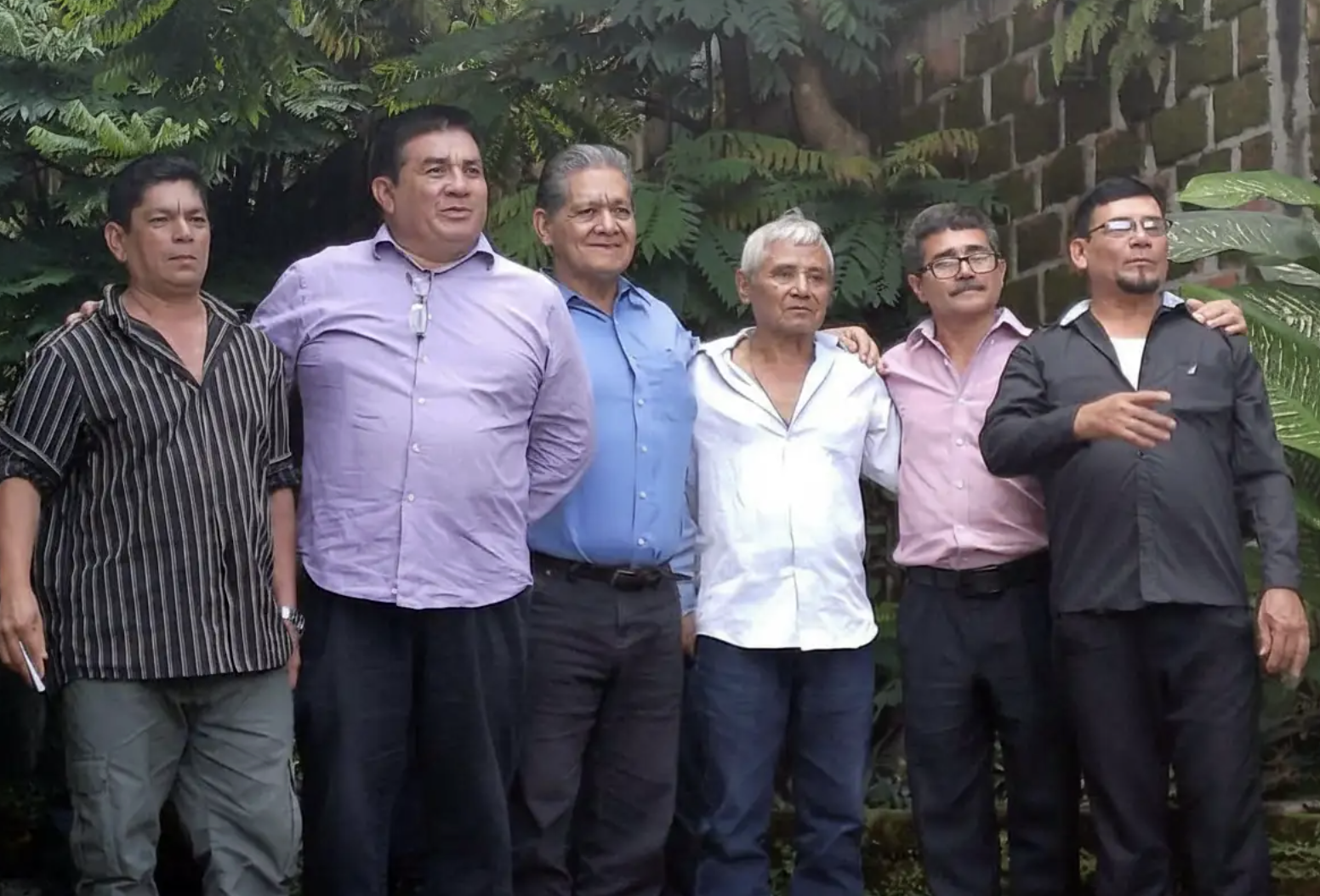
The Sentencing Court of Sensuntepeque unanimously acquitted five anti-mining leaders from Santa Marta. After 13 months in detention, it was determined that the Prosecutor’s Office failed to prove the murder of a woman that allegedly occurred during the war. / Courtesy of ADES Santa Marta.
The celebration did not last long. An appellate court ordered the trial to be repeated while, at the same time, President Bukele asked his legislators to reverse the law that banned mining and draft a new one allowing it. On December 23 of that year, on the eve of Christmas Eve, the pro-government Assembly fast-tracked and approved the new law.
For Vidalina, that moment confirmed what she had long suspected. "That is when the real purpose is unmasked," she says. "The intention was to remove from the path all the voices that have been speaking out against mining."
However, the government’s decision was unpopular. For the first time since Bukele took office, one of his policies faced majority rejection in public opinion, with more than 72% of Salvadorans opposing mining. During the first months of 2025, several citizen protests were organized to express discontent. Vidalina joined them, and then the warnings returned.
"Just before Ruth (López) was arrested, I had received some warnings from people I trust. They told me I was one of the women on a list, along with Ruth and Ingrid Escobar (Socorro Jurídico)," she recounts. Since then, she has taken some precautions, although she has not stopped speaking out.
In September 2025, another court once again acquitted the Santa Marta environmentalists. Even so, the community fears that the Prosecutor’s Office may attempt to reopen the case yet again.
— Vidalina Morales, environmental leader
FOCOS requested information from the Office of the Attorney General regarding the grounds for the arrests of the Santa Marta environmental leaders, as well as the allegations of criminalization linked to their opposition to metallic mining. At the time of publication, no response had been received.
Leaving to survive
Malcolm Cartagena worked for twenty years at the Supreme Electoral Tribunal (TSE). He was never an official with decision-making power, but he served as an electoral trainer and, early in his career, as a technical advisor to then-magistrate Eugenio Chicas, a former member of the FMLN and one of Nayib Bukele’s political prisoners.
Among the staff in Chicas’s office was also Ruth López, the anti-corruption lawyer and human rights defender from Cristosal who was irregularly arrested on May 18, 2025. Malcolm has known her for years, and from her he learned almost everything he knows about electoral law. "She is like my sister," he says.
With her support, he became an electoral trainer. He taught hundreds of citizens, members of polling station boards, police officers, prosecutors, and staff from the Human Rights Ombudsman’s Office how a democratic election day is supposed to function, in theory.
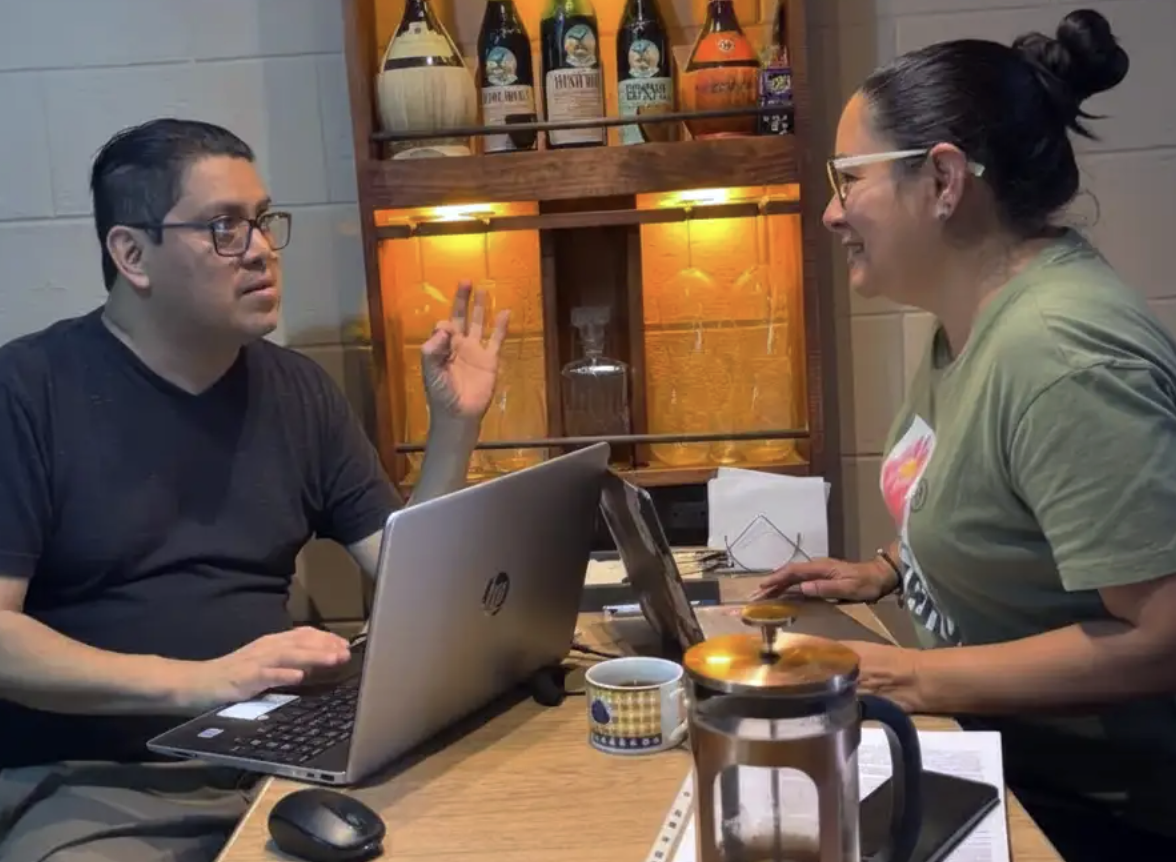
Malcolm Cartagena worked at the Supreme Electoral Tribunal (TSE) for more than a decade. At that institution, he met Ruth López, a political prisoner of Nayib Bukele’s regime. / Courtesy.
That is why, when Bukele pushed forward reforms to change the formula used to allocate seats in the Legislative Assembly, reduce the number of deputies, and merge municipalities, Malcolm was certain that the 2024 elections would leave a less democratic country. And they did. The 2024 presidential election granted Bukele reelection, against what is established in the Constitution, and the legislative elections gave him an almost absolute majority in Congress, with 54 out of 60 seats.
Alongside Ruth, Malcolm Cartagena was one of the voices that openly criticized these reforms for the setback they represented in terms of civil rights. During the electoral process, both documented allegations of fraud presented by the opposition, pointed out irregularities during the vote count, and provided their technical analysis, all while being attacked on social media for having worked at the TSE.
Given the level of threats and stigmatization, Ruth knew she could be arrested. Malcolm recalls that she told him so. But both recognized that it made little sense, they held no decision-making power, did not manage funds, and did not sign off on anything. Their work had consisted of advising, training, and explaining procedures. They talked about it many times. Still, Ruth had already decided to stay.
For him, the answer was not as simple. Malcolm suffers from stage five chronic kidney failure. Until he left El Salvador, he performed daily peritoneal dialysis at home. Social Security delivered the supplies to him each month. He had a nephrologist, a nutritionist, a psychologist. He paid a monthly fee of just $30 USD.
— Malcolm Cartagena, exile
On the night of Ruth’s arrest, Malcolm was the first person outside the family to find out. Ruth’s daughter called him at 10:30 p.m., and he answered thinking she needed help fixing her computer. When he learned what had happened, he was certain they would come for him that same night. He could not sleep.
A month later, on June 25, three armed police officers knocked on his door. They said they were conducting a census. They asked how many people lived in the house, whether he had internet, whether he had a vehicle, yet they wrote everything down on a loose sheet of paper. The vehicle they were using had no license plates. And in El Salvador, censuses are not conducted by the Police.
Malcolm says they only visited his house in the entire street. Later, they returned and asked neighbors how many people lived there. The same script had already appeared in other homes of defenders and opposition figures: vague questions, an intimidating presence, and weeks later, an arrest. Malcolm understood the message.
He left the country without undergoing dialysis for three days. When he arrived at his destination, doctors admitted him immediately, his lungs were filled with fluid. He spent three days hospitalized.
FOCOS requested comments from the Presidential Press Secretariat regarding reports of harassment against critical voices within the electoral system. At the time of publication, no response had been received.
Malcolm refers to himself as an exile of the regime. He has no open criminal case, he faces no sentence, and yet he cannot return. He knows how El Salvador reached this point. He has studied it. In El Salvador, electoral rules were bent, spaces were closed, critics were persecuted. He knows that dictatorships do not begin with grand proclamations, they begin with technical adjustments, with discreet reforms, the kind he has spent so much time trying to explain.
The war of attrition
The arrest of Ruth López is a visible episode in a much longer story.
In October 2020, during a national broadcast, Nayib Bukele mentioned Cristosal for the first time. He accused the organization and Tutela Legal "María Julia Hernández", defenders of victims and survivors of the El Mozote massacre in the criminal case against more than a dozen retired military officers, of being "front groups" for the Farabundo Martí National Liberation Front (FMLN), an opposition party founded by former guerrilla fighters after the 1992 Peace Accords.
Cristosal had been operating in El Salvador long before Bukele came to power. In 2014, it focused on assisting people displaced by gang violence, documenting more than 1,000 cases between 2017 and 2018. They proposed legislation and created mechanisms to protect victims of internal forced displacement, a phenomenon that the government at the time, led by the FMLN, refused to acknowledge.
Tension with successive governments had been common, but under Nayib Bukele’s administration, the State began to actively persecute them. The breaking point came on February 9, 2020, when Bukele entered the Legislative Assembly with military forces, according to Abraham Ábrego, a human rights defender with three decades of experience and current head of Strategic Litigation at Cristosal.
Before that date, they held meetings with officials from the Presidential Office. But after participating in a press conference rejecting Bukele’s military action, they were barred from any space for dialogue with the government. "From that point on, a discourse against NGOs began, and we never met with them again," Ábrego states.
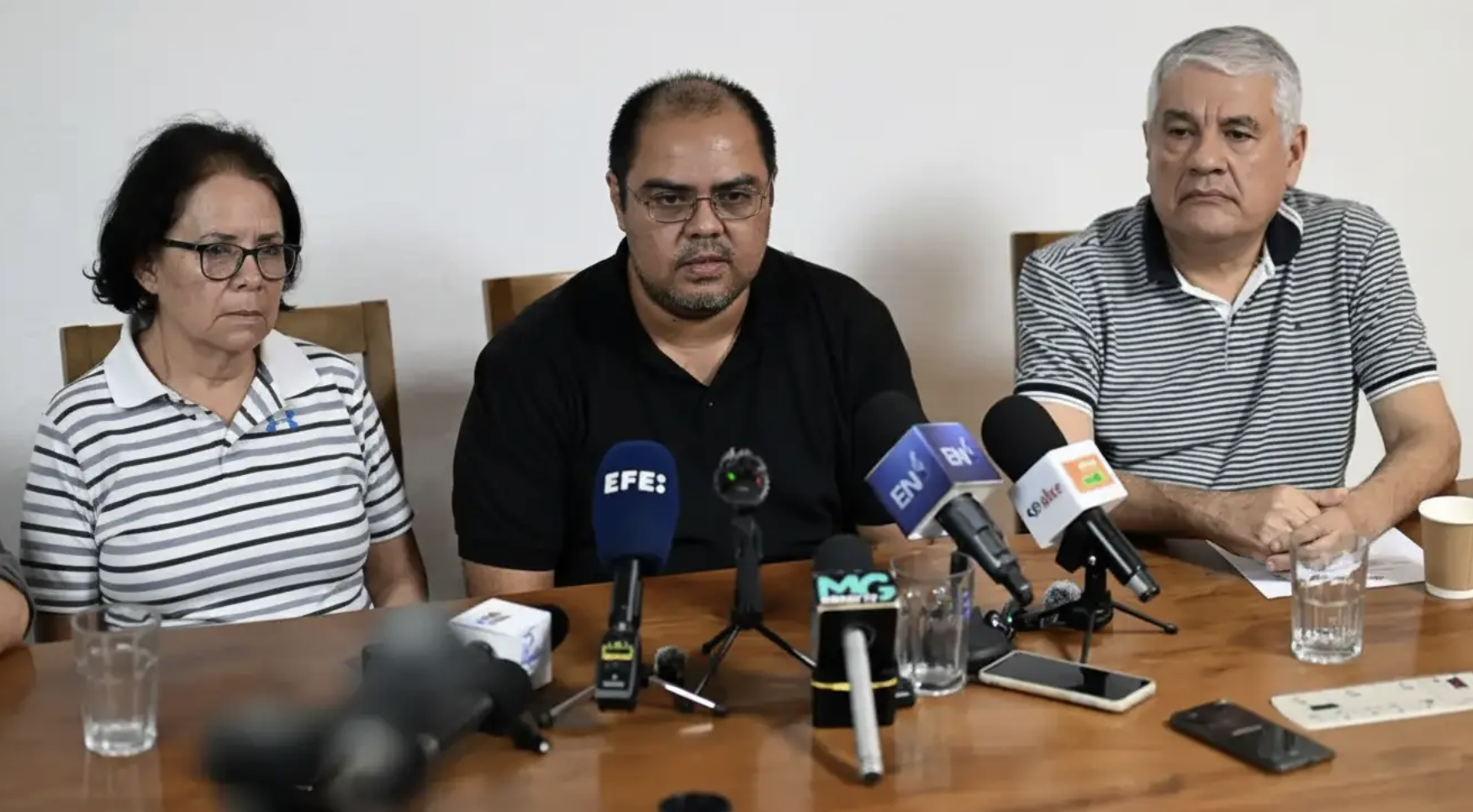
It was during the COVID-19 pandemic that Cristosal decided to expand its strategic scope and include the documentation of human rights violations and anti-corruption efforts within its work. "We realized this was a different style of government, one with an authoritarian character," Ábrego states.
A study presented by a dozen Salvadoran organizations in 2023 found that there are serious violations of the rights to association, participation, and freedom of expression in El Salvador. The report details that 71 organizations reported police and military harassment against their members, as well as obstacles to spaces for assembly.
Administrative pressure against Cristosal began in 2021. The Ministry of Finance launched a thorough audit of the organization’s accounts dating back to 2019. Although the administration submitted all requested documentation, in December the government revoked a tax exemption it had held for years. The decision came on the eve of Christmas, just as public institutions were about to close for the holidays.
Cristosal filed legal appeals, and the courts declared themselves incompetent to resolve the matter. The process became trapped in an administrative maze while the organization spent time and resources responding.
By the time Ruth López was arrested, the ground had already been prepared. Audits, information requests, accounting challenges, and public stigmatization labeling them as "defenders of gang members." Each action on its own appeared to be a routine legal procedure, but together they narrowed the operational space for Cristosal and other civil society organizations.
On April 28, 2025, while Cristosal was holding a press conference alongside Kerry Kennedy, president of the U.S.-based organization Robert F. Kennedy Human Rights, agents from the National Civil Police entered the organization’s offices in San Salvador. They did not speak to anyone, they simply walked through the premises, taking photographs of vehicles and offices.
Until Ruth’s arrest, Cristosal had not considered leaving El Salvador. "When the arrests of transport workers and environmentalists from the El Bosque Cooperative began in May, we started to see things becoming more complicated," Ábrego says. "But we still had not made the decision to leave. That only came after Ruth was arrested."
FOCOS requested comments from the National Civil Police and the Presidential Press Secretariat regarding the audits, police inspections, and public accusations against Cristosal, as well as reports of persecution against its members. At the time of publication, no official response had been received.
On July 17, 2025, Cristosal announced the closure of its office in San Salvador and the relocation of its operations to Guatemala. After years of sustained pressure, the space to operate within the country had become unlivable.
The organization’s decision was a response to the escalation of criminalization against human rights defenders, as well as the enactment of the Foreign Agents Law (LAEX), approved by the Legislative Assembly at the request of Nayib Bukele on May 20, 2025.
The Foreign Agents Law imposes two main requirements on organizations that receive foreign funding or donations: it establishes a 30% tax on those funds and mandates registration in a new registry. This registry holds broad powers to determine what types of activities organizations are allowed to carry out in the country.
In addition to Cristosal, other civil society organizations have announced their dissolution or departure from El Salvador. The Foundation for the Study of the Application of Law (FESPAD) and the Foundation for the Development of Social Sciences (FUDECSO) announced their dissolution at the end of 2025 after decades of work.
Meanwhile, the Association of Journalists of El Salvador (APES), the country’s main journalists’ association, announced its departure from El Salvador, stating that current political conditions make it impossible to continue its work.
Environmental organizations such as the Center for Applied Studies in Ecology and Environmental Sustainability (ECOS El Salvador) have permanently shut down operations following the escalation of persecution and criminalization in 2025.
"I left so I could keep speaking"
Angélica Cárcamo did not leave El Salvador fleeing, she left as a precaution. The former president of the Association of Journalists of El Salvador (APES), co-founder of the independent outlet Infodemia, and current director of the Central American Network of Journalists (RCP) has been out of the country for nearly a year. When she left, in late May 2025, she did not plan to stay. She packed for two weeks.
"I didn’t want to leave," she says. But during those days, the warnings intensified: anti-corruption lawyer and activist Ruth López had been arrested, along with community leaders and environmental defenders, and outside her home, the police presence no longer felt routine. It began to feel like a warning of what was coming next.
The decision was calculated: leave before they knocked on the door. A preventive measure. The plan was to return in mid-June, but during those days, constitutional lawyer Enrique Anaya, a fierce critic of the government, was arrested. That is when she understood that returning was no longer a safe option.
— Angélica Cárcamo, journalist
From APES, they had already observed the shift in trends backed by data: between 2020 and 2022, the State became the leading aggressor against journalists, displacing gangs and organized crime, according to the association’s records. The reports include restrictions at press conferences, blocked access to public information, and stigmatization campaigns. Angélica was one of the most visible voices in these denunciations.
APES has maintained a critical stance toward different governments. However, according to Cárcamo, the current context is defined by a greater concentration of power and a media environment shaped by fear and self-censorship.
The report "The Curve of Silence", produced by APES, documents that at least 43 journalists left the country between March and June 2025, marking an unprecedented phenomenon in recent decades.
The most critical point occurred in May, when 31 journalists left El Salvador in a single month, "practically one per day," according to the report.
Most did not leave due to direct, executed threats, but in anticipation: more than 85% of reported cases indicate that the decision was driven by fear of a possible arrest warrant.
Additionally, the profile of those in exile reveals a significant loss for the information ecosystem: more than 60% of those who left were journalists with over a decade of experience and established careers, mostly in digital and independent media.
As of November 2025, at least 53 Salvadoran journalists had left the country, according to data from the Central American Network of Journalists. By the end of this investigation, the figure had risen to 59. This group includes journalists from print, digital, and community media.
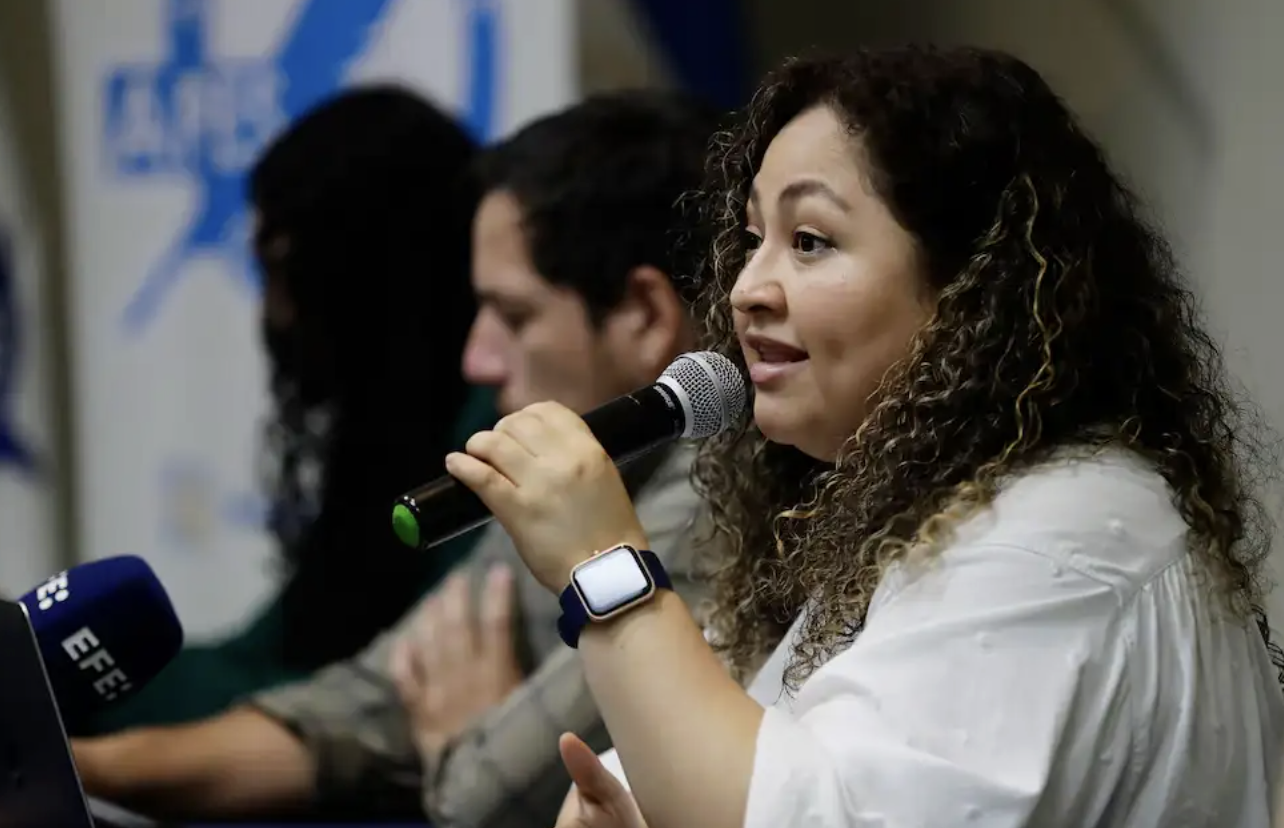
Angélica Cárcamo, current director of the Central American Network of Journalists, left the country following the arrests of human rights defenders in May 2025. At least 59 journalists have left El Salvador in nearly a year. / RCP.
This context is compounded by new legal restrictions. The Foreign Agents Law, approved by the Legislative Assembly, imposes a 30% tax on international cooperation funds, fines of up to $250,000 USD, and limitations on organizations addressing political issues. This was a direct blow to media outlets that relied on donations or foreign funding to operate in the country. "This is not a law for all organizations. It has clear targets," Angélica argues.
The impact is already visible. Most journalists who have left the country migrated regularly within the region, and some have begun formal asylum processes. In addition, media outlets such as FOCOS and Revista GatoEncerrado have ceased operations in El Salvador, relocating to Costa Rica.
FOCOS requested comments from the Presidential Communications Secretariat and the National Civil Police regarding the complaints documented by journalist organizations about aggression, harassment, and restrictions on press freedom. On multiple occasions, the government has rejected these claims and stated that full freedom of expression exists in El Salvador. At the time of publication, no response had been received.
Angélica has followed all these cases closely. She has received calls at dawn, at night, and during the day, journalists asking for help to leave after receiving threats or being surveilled by police at their homes. Others have written to her because they urgently need psychological support, dealing with the unresolved grief of leaving behind their country, their children, their partners, their pets. And through them, Angélica relives her own grief.
That is why the word "exile" took time to settle in. She says it was not until the end of 2025 that she realized it was not a pause. The hardest blow, she says, was not the day she left. It was the day she understood she could not return.
Angélica sometimes feels guilt. There are journalists and defenders who still remain in El Salvador. Some are exposed in rural areas. Ruth López is in prison. She, on the other hand, is free and abroad, and that freedom also feels like a heavy burden.
She wonders whether she made the right decision. Then she remembers a phrase someone told her before leaving:
Trade unionism under punishment
For more than two decades, Sonia Viñerta supported women victims of violence from within the State. Today, she is one of the hundreds of public workers dismissed in a context that labor organizations describe as a setback for trade union freedom in El Salvador.
Sonia is a union organizer, a member of the Movement for the Defense of Workers’ Rights (MDCT), and a former employee of the Salvadoran Institute for the Development of Women (ISDEMU), one of the few state institutions focused on supporting women victims of violence, which has been weakened under Bukele’s government.
For 26 years, she worked with impoverished communities, public employees, and rural workers. During that time, she founded the Union of Workers of ISDEMU, one of the more than 50 unions that have disappeared under Nayib Bukele’s administration.
Her case is not isolated. During Nayib Bukele’s first administration, the Movement of Dismissed Workers (MTD) reported more than 21,000 layoffs of public employees due to the elimination of positions and the closure of state institutions.
The National Confederation of Salvadoran Workers (CNTS) reports that at least 60 unions have been dismantled and that hundreds more have faced threats. According to this organization, at least 500 union leaders have been dismissed since Bukele took office, including Sonia Viñerta.
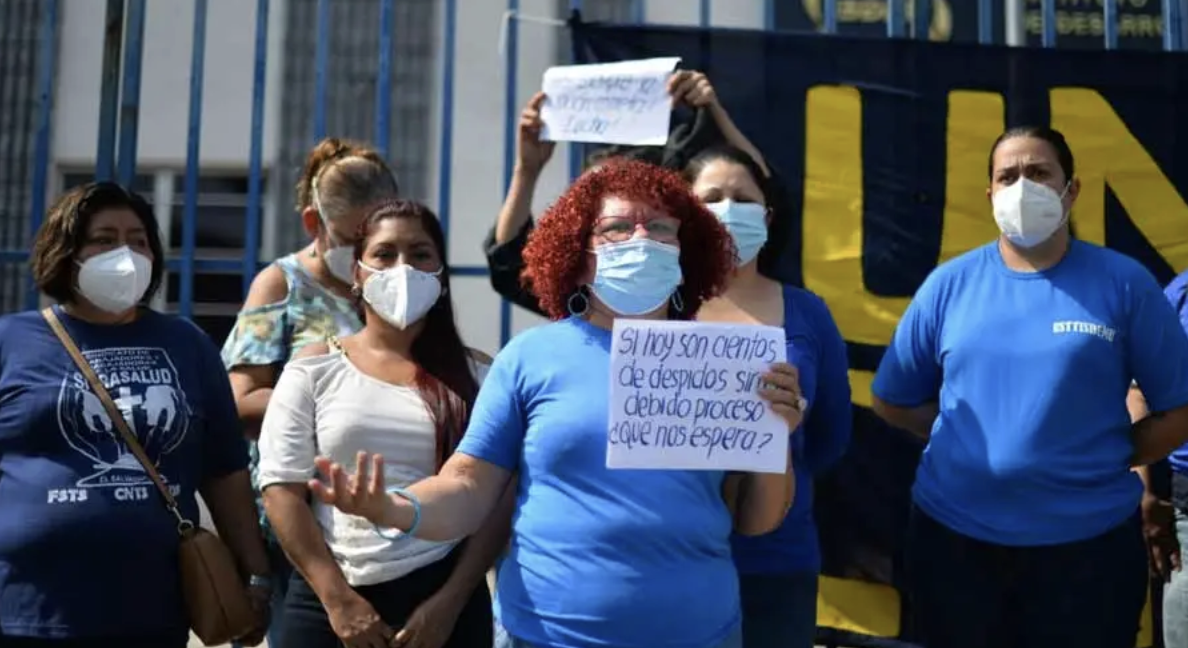
Sonia Viñerta protests alongside organized workers who have been dismissed without due process. / Courtesy.
The pressure was not limited to dismissals. In 2022, following the implementation of the ongoing state of exception, arrests of trade unionists began. On April 28 of that year, ahead of International Workers’ Day, the Minister of Labor, Rolando Castro, threatened to apply the regime to those participating in marches. He labeled them "terrorists".
Sonia Viñerta marched that year and the three that followed. She also continues to give public statements, despite warnings that feel increasingly close. Before being dismissed, an advisor from ISDEMU’s leadership warned her: "stop giving interviews, stop appearing in the media." She did not.
Between May and July 2024, she publicly denounced the dismissal of pregnant women in the public health system alongside other unions. On December 23, 2024, 104 ISDEMU workers were dismissed. 101 were women, and Sonia was among them.
"I knew it would happen sooner or later, but it still hurts," she says. Since then, she has been living on a minimal pension and dealing with the consequences of burnout. She says she has developed diabetes. She has experienced depressive episodes. She has had to seek psychological care.
The hardest blow, however, was not losing her job. It was the stigma. "They call you a thief, an enemy of the country."
That label, she says, has grown louder since she turned to the International Labour Organization (ILO) to report violations of trade union freedom and dismissals in the public sector. Her confederation is one of the few that has kept these complaints active at the international level.
The union leader participated in the 113th International Labour Conference in Geneva, where she presented the country’s labor situation before representatives of different states and trade union organizations. "I had five terrible minutes of glory," she says. "I say terrible because talking about the labor situation in five minutes is impossible."
In her intervention, she reported that she had been dismissed from her position and that she faces obstacles to exercising union functions. She spoke about the 19 trade unionists arbitrarily detained during the state of exception. One of them, Leonidas Bonilla, died in state custody on September 3, 2022, and his body showed signs of torture, according to his relatives.
FOCOS requested a response from the Ministry of Labor and the Presidential Communications Secretariat regarding the dismissals, the allegations of restrictions on trade union freedom, and claims of persecution against union leaders. As of the publication of this report, no response had been received.
Sonia states that, despite government attempts to withdraw or weaken union complaints, El Salvador remains under observation by the ILO Committee on the Application of Standards due to the allegations presented by labor organizations and their international allies.
She added that they have continued submitting documentation and evidence regarding non-compliance with international labor agreements, with the aim of exposing to international bodies the situation of workers’ rights, which she insists are also human rights.
Sonia says the country is experiencing a setback, but she also believes, or wants to believe, that there are cracks. She speaks of social media, of people beginning to speak out. Of indignation.
But almost no one dares, not even within the trade union movement, to continue speaking out. "The problem is not what people think," she says. "It is showing your face."
"In marches, it is always the same faces," she insists. Still, they continue.
— Sonia Viñerta, trade unionist, when asked: Are you afraid?
The regime’s reach crossed borders
What began as a trip for international advocacy ended up becoming a case of persecution that, according to international organizations, exemplifies the expansion of repression beyond Salvadoran borders.
Ivania Cruz did not leave El Salvador intending to go into exile. In November 2024, she traveled to Europe with a defined agenda: to denounce before parliamentarians and human rights organizations the consequences of the state of exception, including mass arrests, lack of due process guarantees, and impacts on entire communities. Her return was scheduled for March 3, 2025.
It never happened. On February 25, while she was outside the country, the Office of the Attorney General (FGR) issued an arrest warrant against her and raided her home and the offices of the Unit for the Defense of Human and Community Rights (UNIDEHC), the organization she is part of.
UNIDEHC brings together independent lawyers and community leaders who initially supported people displaced by eviction lawsuits and arbitrary dismissals; however, since 2022, they began documenting and defending individuals detained under the state of exception.
According to Ivania, on the day of the operation, her mother was alone at home with her underage son. Officers from the National Civil Police and the FGR broke down two metal doors without presenting any judicial warrant, as shown by the cameras Ivania had installed in her living room.
They pointed a gun at a woman with chronic illnesses and demanded her phone. They searched the house before the lawyer arrived. An hour later, they showed a document that did not even mention her mother’s name or Ivania’s. They were looking for Rudy Joya, they said.
That same day, authorities also detained members of UNIDEHC and community leaders linked to the case of La Floresta community in San Juan Opico, where the organization had supported complaints over attempted evictions of more than 200 families.
The first person detained was Fidel Zavala, who had joined the organization after being arrested during the state of exception. Amnesty International has warned that his life is at risk inside prisons, as he reported prison guards and the director of the prison system, Osiris Luna, to the Attorney General’s Office for the torture he endured under the regime.
The authorities’ explanation of the case has been limited. The Attorney General’s Office has accused Zavala, Ivania Cruz, and her colleague Rudy Joya of crimes such as illicit association and irregular land parceling, alleging they led a supposed criminal structure. "This is a case designed to silence us," Ivania asserts.
The lawyer witnessed everything from afar, through cameras previously installed in her home and office. Since 2021, she says, she had documented constant surveillance: vehicles parked for hours outside her home, people sleeping inside cars with plates linked to non-existent companies, and police taking note of her movements.
Prosecutorial sources had confirmed to her that authorities had compiled files using photographs downloaded from social media. They were prepared for surveillance: they had learned how to move, to avoid sleeping in the same place, to distribute sensitive documents among several people. But that afternoon, from another continent, watching was useless.
Faced with the arrest warrant, returning to the country meant, according to Cruz, immediate detention. "It was not a heroic decision, it was the only possible one," she states.
Meanwhile, her family remained in El Salvador. Her mother was warned of possible obstruction charges during the raid, which later led her to also leave the country. However, leaving did not stop the persecution.
By not appearing before the courts in El Salvador, the judge requested a red notice from the International Criminal Police Organization (INTERPOL). Although the Attorney General’s Office submitted the accusation without the full case file, transnational authorities issued the alert. Spanish police summoned Rudy Joya. He was detained for more than 30 hours while the National Court evaluated the request. Ivania voluntarily appeared the following day and was detained.
Both lawyers were released under precautionary measures, including surrendering their passports, biweekly court check-ins, and restrictions on movement. International organizations began monitoring the case. The United Nations referred to transnational repression: persecution that crosses borders and the use of international mechanisms to intimidate or force returns. Amnesty International also supported the process.
According to a communication sent in November 2025 by the United Nations Special Rapporteur on the situation of human rights defenders and other experts, the case against Cruz and Joya shows signs of criminalization linked to their human rights work.
The INTERPOL alert was withdrawn in December 2025, and the Spanish government granted their asylum request until March 3, 2026; however, the criminal proceedings in El Salvador continue.
The Fifth Court Against Organized Crime extended the investigation phase of the case by six months, scheduling a possible hearing for March 2026, which maintains the risk of potential extradition against the defenders.
— Ivania Cruz, human rights defender
Her case, she notes, has become a legal precedent for the new generation of Salvadoran exiles. "There is now a legal precedent in favor of protection. (The persecution) did not work, at least in the Spanish state," she says.
Those expelled from El Salvador have fewer and fewer options for refuge. The tightening of migration policies in the United States following Trump’s arrival has led Immigration Courts to reject asylum cases more frequently. During 2025, 71% of asylum applications presented before a judge were denied, according to official data from the Department of Justice.
Costa Rica, a country that until a few years ago had a strong tradition of international protection and asylum in Central America, has also hardened its migration policies, cutting funds for its asylum system by 41%. The decision mainly affected those displaced by the regime of Daniel Ortega and Rosario Murillo in Nicaragua.
This is compounded by the political support of countries such as the United States and Costa Rica for the government of Nayib Bukele. "A state that is allied with Bukele, that endorses his policies, is not going to protect you. On the contrary. In the United States they are rejecting visas and asylum claims from exiles who have arrived there," Ivania warns.
This newsroom requested comment from the Attorney General’s Office (FGR), the National Civil Police (PNC), and the Presidential Communications Secretariat regarding the arrest warrants, raids against civil society organizations, and actions against human rights defenders. As of the publication of this report, none of the institutions responded.
From Euskadi, far from San Salvador but still closely following the criminal proceedings against UNIDEHC and the dozens of cases they support, she continues her work: speaking out, denouncing, and documenting the country she was forced to leave.
An investigation by FOCOS by Andrés Dimas and Gabriela Villarroel.
This story is supported by the Impact Reporting program of the Institute for War & Peace Reporting (iwpr.net), which helps local journalists around the world create impact.